Planning Multilingual Ad Campaigns in the UAE
- June 29, 2026· Article by Maria Jones
- Marketing , english to russian translation
Few advertising markets are as linguistically rich as the United Arab Emirates. Around nine in ten residents are expatriates, and the population includes large communities from South Asia, the Philippines, Europe, Russia, Africa and across the Arab world. Add millions of tourists every year, and a single campaign may need to speak to a dozen audiences at once. Planning multilingual campaigns here is part art, part logistics.
This guide walks through how agencies and brands in the Emirates approach multilingual media campaigns, from audience research to the final checks before launch.
Map your audiences before your media
The first step is understanding who you actually want to reach. A real estate developer in Ajman might target local Emirati families, Indian investors, Russian buyers and European retirees. A supermarket chain may focus on residents from many backgrounds. A tourism campaign may be aimed at visitors from Germany, China and the CIS countries.
Every audience has its own language, media habits and expectations. A map that links each audience to its preferred channels and languages saves budget and avoids generic campaigns that speak to nobody in particular.
Choose channels by language
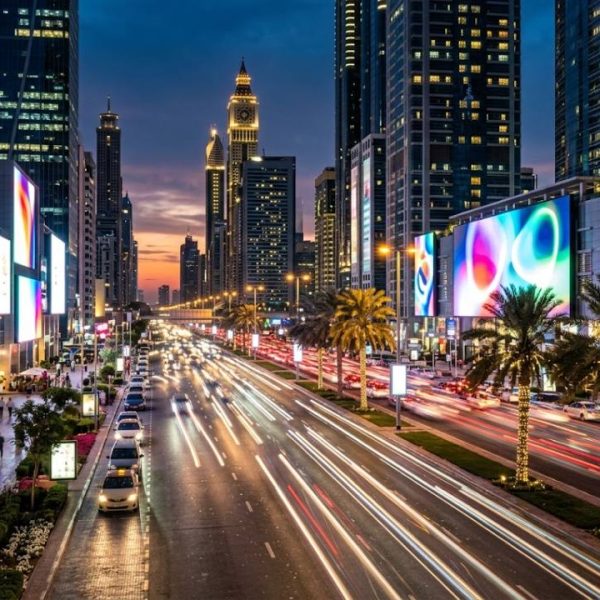
Media consumption in the UAE varies strongly by community. Some audiences rely on Arabic television and radio. Others mainly use English-language news sites, while many communities follow social media, messaging channels and influencers in their own language. Outdoor advertising along major roads reaches almost everyone, but needs short, visual messages that work quickly.
- Outdoor and transit media for broad awareness, usually in Arabic and English.
- Social media ads targeted by language and interest.
- Community media and influencers for specific nationalities.
- Search advertising in the languages people actually use to search.
Write once, adapt many times
The most efficient campaigns start with a strong master message, usually in English or Arabic, and then adapt it for each audience. Adaptation goes beyond word-for-word translation. Headlines may need to change completely, references may need replacing and calls to action may need different wording to feel natural.
Russian-speaking visitors and residents are an important audience for luxury retail, property and hospitality. Professional english to russian translation by marketing specialists ensures the tone matches premium expectations and that grammar and formality are correct. German tourists and investors are another key group, and briefing material from German headquarters often arrives in German. Agencies regularly use german to english translation services to turn those briefs into clear English before creative work begins, so nothing gets lost between client and agency.
Adapting a master campaign for multiple markets goes beyond translation; it requires rethinking imagery, offers, and calls to action for each audience. A slogan that resonates in English may fall flat or even offend when carried directly into another language. Agencies that manage this complexity at scale typically rely on professional localization services.
Build a workflow that scales
A campaign with eight languages and twenty formats quickly becomes hundreds of files. Without a clear process, versions get mixed up, last-minute changes miss some languages and outdated copy goes live. Agencies running campaigns at this scale rely on a tms translation management system that centralises source copy, translations, glossaries and approvals. When the client changes a price or a date, the update is visible across every language immediately.
Good workflow is invisible to the audience, but bad workflow is very visible. A billboard with yesterday's offer or a social ad in the wrong language damages credibility.
Respect cultural and religious context
Campaign timing in the UAE follows a cultural calendar. Ramadan, Eid, National Day and the Dubai Shopping Festival each shape what audiences expect and how messages should sound. Imagery should respect local norms on clothing and behaviour, and humour should be tested carefully. What feels playful to one community can feel inappropriate to another.
Right-to-left and design challenges
Arabic reads from right to left, which affects layout, image direction and the placement of logos and buttons. Simply mirroring an English design rarely works. Designers should create Arabic layouts from the start, check text expansion in other languages and make sure fonts support every script used in the campaign, from Cyrillic to Devanagari.
Test with real people
Before media goes live, native speakers from each target community should review the final assets in context. They catch awkward phrases, wrong cultural references and design issues that translators working from a spreadsheet may miss. Even a short review round with two or three people per language prevents expensive mistakes.
Measure by language, not just by campaign
Digital campaigns allow detailed reporting. Breaking results down by language and audience shows where the message lands and where it needs work. Some languages may outperform expectations, while others need new creative or different channels. Tourism authorities such as Visit Dubai publish visitor insights that help agencies decide which source markets deserve more attention.
The advantage of diversity
Planning multilingual campaigns in the UAE is demanding, but it builds skills that work anywhere in the world. Agencies that master audience mapping, careful adaptation, clean workflows and cultural sensitivity here are ready for any market. In a country of many languages, the brands that listen in every language are the ones people remember.